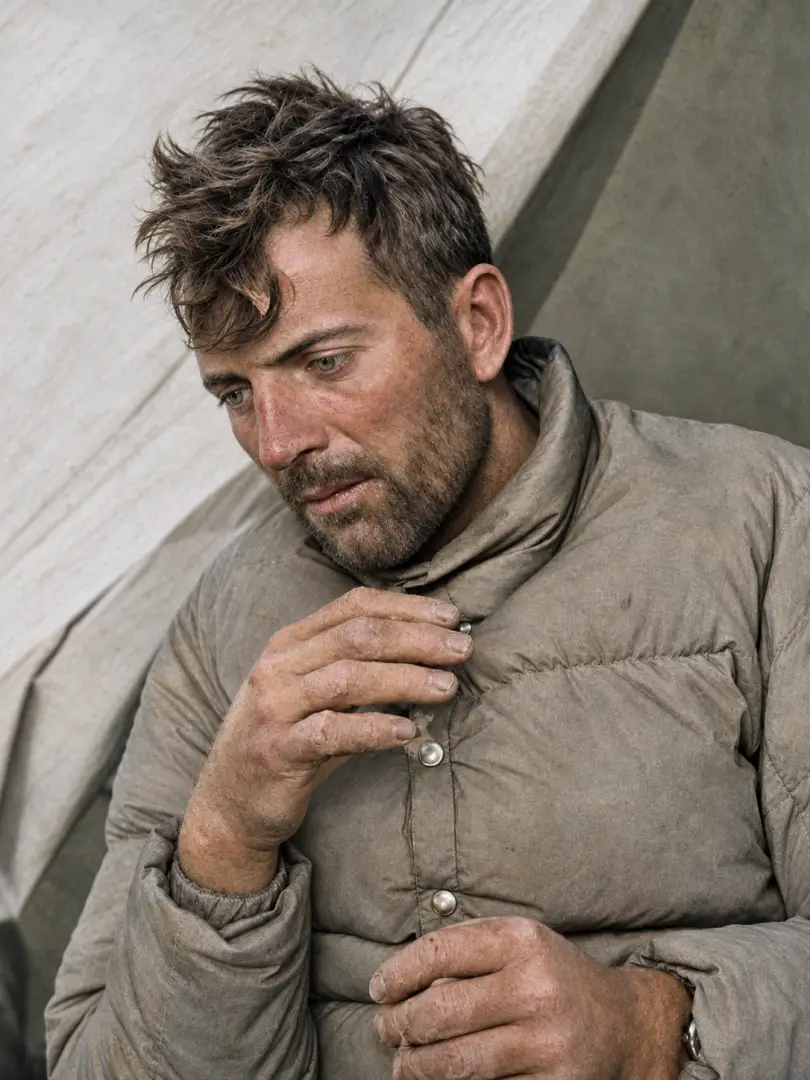

Edited by:
redazione
A French mountaineer, on 3 June 1950 he reached the summit of Annapurna I with Louis Lachenal – the first eight-thousander to be climbed.
Personal details
name: Maurice André Raymond Herzog
date of birth: 15 January 1919 – Lyon
Died: 13 December 2012 – Neuilly-sur-Seine
Nationality: French
Occupation: mountaineer, business executivebusiness executive, politician
Affiliation: Club Alpin Français, Groupe de Haute Montagne
Biography
Maurice Herzog was born in Lyon on 15 January 1919, the eldest of eight children. His father, Robert, was an engineer and mountaineer of Swiss origin who had served in the French Foreign Legion during the First World War [to be verified]. During his childhood and adolescence, Herzog spent time in the Chamonix valley, where he tackled increasingly challenging climbs in the Mont Blanc massif. He studied in Paris, focusing on mathematics and law, and graduated from theÉcole des hautes études commerciales.
During the Second World War, he took part in the Resistance in the Alps and, in September 1944, assumed command of the second company of the 27th Bataillon de chasseurs alpins, taking part in operations on the Alpine front during thewinter of 1944–1945; for his service, he was awarded the Croix de Guerre. In 1945, he joined the tyre manufacturer Kléber-Colombes as a manager whilst continuing his mountaineering activities.
In 1950, he was entrusted with leading the French expedition to Nepal, organised by the Comité de l’Himalaya, sponsored by the Club Alpin Français [to be verified]. He was chosen for his organisational skills, even though there were professional guides in the group with greater technical experience. The group included Louis Lachenal, Lionel Terray, Gaston Rébuffat, Jean Couzy and Marcel Schatz, along with the doctor Jacques Oudot, the filmmaker Marcel Ichac and the liaison officer Francis de Noyelle; the Sherpas were coordinated by Ang Tharkay. The Nepalese permit covered Dhaulagiri and Annapurna, and as no viable route had been found on the former within the time available, Herzog focused his efforts on the latter as the monsoon approached. On 3 June 1950, he reached the summit alongside Lachenal, without supplementary oxygen.
The descent proved to be the most serious incident of the expedition. Herzog lost his gloves at high altitude and suffered severe frostbite to his hands; as the weather worsened, the descent took place in a blizzard, and Terray and Rébuffat, who came to their aid, were in turn struck by snow blindness. Herzog lost his fingers and toes, whilst Lachenal lost his toes. His state of health effectively brought his high-altitude mountaineering career to an end.
During his convalescence, he dictated the account of the expedition, which was published in 1951. The book was translated into numerous languages and sold in millions of copies [to be verified]; the proceeds are said to have been used for years to fund new French expeditions [to be verified]. The documentary filmed by Ichac and the photographs published in the international press contributed to the fame of the expedition.
A debate has arisen regarding the reliability of the 1951 account, particularly since the 1990s. The facts on which the sources agree are Herzog and Lachenal’s ascent on 3 June 1950, the absence of supplementary oxygen, frostbite and amputations. For decades, the main account was Herzog’s own. Lachenal’s writings, published posthumously under the title *Carnets du vertige*, offer a different perspective on the decisions taken during the summit push, particularly regarding the risk of frostbite. David Roberts, an American journalist and mountaineer, reignited the debate on the management of the expedition and control of the public narrative with his book *True Summit* (2000); Félicité Herzog, Maurice’s daughter, published *Un héros* in 2012, which takes a critical look at the family myth [the nature of the work to be verified]. These are interpretations attributed to their respective authors: none of them questions that the ascent was carried out by Herzog and Lachenal, and the debate centres on the role of the other members and the reasons behind certain decisions.
Herzog held positions within mountaineering organisations: he was president of the Groupe de Haute Montagne from 1951 to 1956 and of the Club Alpin Français from 1954 to 1956 [to be verified]. The fame of the expedition led him into public life: on 27 September 1958 he was appointed High Commissioner for Youth and Sport, and from11 June 1963 to 8 January 1966, he served as Secretary of State for the same portfolio. He was a Member of Parliament for the Rhône in 1962–1963 and for Haute-Savoie from 1967 to 1978, and mayor of Chamonix-Mont-Blanc from 1968 to 1977. He joined the International Olympic Committee in 1970, remained a member until 1994 and became an honorary member in 1995. In 2011, he was awarded the Grand Cross of the Légion d’honneur.
He died on 13 December 2012 in Neuilly-sur-Seine, aged 93.
Mountaineering achievements
Dhaulagiri (8,167 m) - 1950 – reconnaissance by the French expedition; no viable route identified within the time available (Himalayas, Nepal)
Annapurna I (8,091 m) - 1950 – first ever ascent of an 8,000-metre peak, on 3 June, with Louis Lachenal, without supplementary oxygen, via the north face; leader of the French expedition (Himalayas, Nepal)
Works
Annapurna, premier 8 000, Paris-Grenoble, Arthaud, 1951
Regards vers l'Annapurna, Paris-Grenoble, Arthaud, 1951
Men on Annapurna, Milan, Garzanti, 1952
L'Autre Annapurna, Paris, Robert Laffont, 1998
Renaître. Another Life After Annapurna, Paris, Jacob-Duvernet, 2007
Bibliography
As a writer
not applicable: no critical study dedicated to his written work has been found
As a significant reference
Louis Lachenal, Carnets du vertige, 1956, expanded edition, Chamonix, Guérin, 1996
Lionel Terray, Les Conquérants de l’inutile, Paris, Gallimard, 1961
Yves Ballu, Gaston Rébuffat, une vie pour la montagne, Paris, Hoëbeke, 1996
David Roberts, True Summit, New York, Simon & Schuster, 2000, French edition Annapurna, une affaire de cordée, Chamonix, Guérin, 2000
Catherine De Baecque, Maurice Herzog, le survivant de l'Annapurna, Paris, Arthaud, 2011
Félicité Herzog, Un héros, Paris, Grasset, 2012